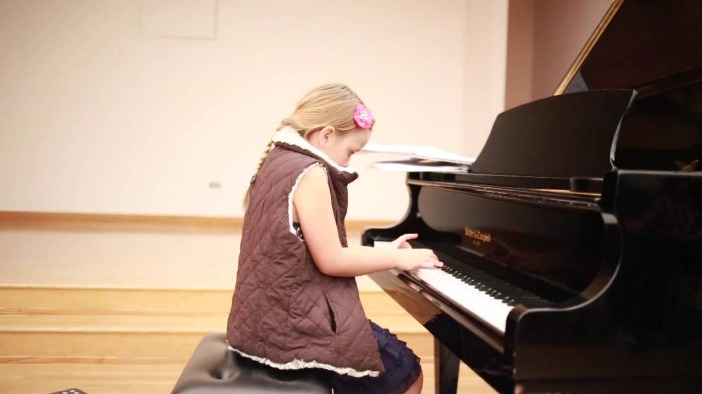
Families who explore music education quickly discover how uniquely the piano can meet the needs of autistic children. With its logical layout, immediate sound feedback, and flexible repertoire, the instrument invites exploration without forcing language-heavy interaction. Well-designed instruction can transform attention, motor planning, and self-regulation into musical strengths. Whether beginning with simple rhythms or advancing into expressive interpretation, piano lessons for autism turn structured sound into a supportive sensory experience. When goals align with strengths—pattern recognition, visual thinking, special interests—the piano becomes more than a hobby; it becomes a framework for growth. Carefully paced lessons that respect autonomy nurture confidence, communication, and joyful participation in a world where music offers clarity, predictability, and creative choice.
Why the Piano Works for Autistic Brains and Bodies
The piano rewards patterns, routine, and incremental progress—qualities often welcomed by autistic learners. Keys are laid out in a visible logic: repeating groups of black keys guide orientation, while the left-to-right arrangement supports visual scanning and spatial mapping. This predictable design turns abstract theory into objects that can be seen and touched, allowing students to internalize scales, intervals, and chord shapes through multisensory learning. For many, this layout calms uncertainty and supports executive function: planning, sequencing, and working memory are strengthened as students link consistent finger movements to stable sound outcomes.
Sensory regulation is a core benefit. The piano offers immediate auditory feedback, yet volume can be managed with dynamics, soft-touch techniques, and pedal control. Repetitive patterns—arpeggios, ostinatos, and breath-like phrasing—can provide grounding rhythms. With carefully chosen repertoire, sound becomes scaffolding for attention rather than a source of overload. Teachers can modulate complexity, tempo, and timbre to match arousal levels, using steady pulses for focus or flowing motifs for decompression. When needed, noise-dampening tools or digital keyboards with volume control further tailor the environment.
Motor development also thrives at the instrument. Playing fosters bilateral coordination, finger individuation, and cross-midline movement as hands meet, mirror, or alternate roles. Structured technique drills are not just musical—they’re opportunities to build fine-motor precision and proprioception. Students who prefer consistent routines can progress through predictable warm-ups and graded challenges, celebrating competence at every step. Meanwhile, improvisation gives space for autonomy. By exploring pentatonic scales or two-note “mood” clusters, learners practice choice-making without fear of error, which can be empowering for those who experience perfectionism or performance anxiety.
Communication and emotional expression grow naturally in this environment. Music provides a nonverbal channel to express energy states, interests, and narratives. A child fascinated by trains might develop a chugging rhythm; a student drawn to symmetry might craft antiphonal call-and-response phrases. With mindful guidance, piano lessons for autistic child experiences integrate social interaction through shared duets, turn-taking games, and collaborative composition—all while preserving the student’s sense of safety and agency.
Designing Effective Piano Lessons for Autistic Children
Successful instruction begins with a strengths-based profile. What motivates the learner? How do they communicate—speech, gestures, AAC, visual schedules? What sensory inputs support focus? Answers inform a tailored sequence where goals are specific, observable, and meaningful: sustain a steady pulse for eight measures, coordinate a three-note arpeggio, improvise with a teacher for 60 seconds, or perform a preferred piece for family. Clear, achievable targets build mastery. A predictable routine—greeting, warm-up, core task, choice time, recap—lowers anxiety and invites participation from the outset.
Visual supports can transform complex concepts into digestible steps. Color-coded note heads, simplified staves, and chord “maps” create bridges to standard notation. Finger-number charts and hand silhouettes guide posture and alignment without constant verbal prompts. First-then boards outline the session flow: first scale patterns, then a favorite theme. For time management, sand timers or simple countdowns help students gauge transitions. Above all, prompts should fade as independence grows, letting the learner own each achievement. Reinforcement—verbal celebration, stickers, or brief play on a favorite sound—should directly connect to effort and strategy, not just outcomes.
Adaptation is essential. If a student is sensitive to abrupt dynamics, the lesson can start with muted practice on a digital keyboard and gradually layer acoustic sound. If fine-motor tasks trigger frustration, begin with blocked practice (repeating the same movement) before varying patterns. Use micro-rehearsals: 20–40 second practice bursts with short sensory breaks. Leverage special interests to build repertoire—video game themes, nature sounds, or rhythmic motifs echoing a beloved activity—so engagement stays high. Incorporate improvisation to balance structure with autonomy, using limited-note palettes and call-and-response to scaffold success.
Caregiver collaboration multiplies progress. Send home concise practice plans with one or two targets, not a long checklist. Short, frequent sessions (5–10 minutes) often outperform marathon practice. Provide recordings at the ideal tempo; suggest metronome apps or backing tracks that make repetition feel like play. If communication differences are present, document preferred cues and scripts. When needed, involve occupational or speech therapists to align piano goals with broader skill building. In this integrative approach, piano teacher for autistic child methods elevate learning not by lowering expectations, but by engineering the environment so success is reachable and repeatable.
Choosing the Right Teacher and Real-World Success Stories
Instructor fit matters as much as curriculum. Seek someone with trauma-informed, neuroaffirming practices who welcomes stimming, flexible seating, or movement breaks. A great teacher will observe first and instruct second, matching their language to the student’s comprehension style, honoring consent for physical prompts, and using data to guide decisions. Experience with AAC, visual supports, and sensory accommodations is a major plus. An educator who can adapt between notation, chordal lead-sheets, and ear-based learning ensures that access—not conformity—leads the way. A qualified piano teacher for autism will also be transparent about pacing, progress markers, and how they will fade supports toward independence.
Case study: A 7-year-old who avoids unpredictable noise begins on a digital keyboard with headphones, exploring two-note “calm” clusters and slow pentatonic improvisations. Over eight weeks, dynamic control activities and predictable warm-ups reduce startle responses. By week twelve, the student plays a simple left-hand drone with a right-hand melody at soft volume on an acoustic piano. The key was pairing self-chosen sounds with gradual sensory exposure, proving that emotional safety accelerates musical growth.
Case study: A 10-year-old with a strong interest in maps and symmetry thrives on pattern recognition. Lessons center on mirrored hand shapes, contrary-motion scales, and palindromic rhythms. Visual chord grids show inversions as “locations” on the keyboard. After three months, the student composes a short ABA piece using mapped motives, reads simplified notation confidently, and independently sets up practice with a visual checklist—evidence that structured design empowers executive function.
Case study: A 14-year-old who prefers minimal verbal interaction engages through duet improvisation. The teacher establishes a steady left-hand groove while the student overlays motifs tied to favorite game themes. Recording sessions create a portfolio the student proudly shares. From there, the learner transitions to chord progressions and ear training, discovering that chords are “toolkits” for composing. The outcome is increased motivation, self-advocacy (“I need a slower tempo”), and expanding practice time by choice.
Parents and caregivers can bolster success by aligning expectations with the learner’s profile. Progress may appear non-linear: a new sensory environment or unfamiliar piano can temporarily reduce fluency. Plan for generalization with short “field trips” to different instruments or rooms. When public performance feels overwhelming, curate alternatives: video recitals, small sharing circles, or asynchronous recordings. Consider hybrid lessons—some in person, some online—to manage energy and consistency. Above all, remember that autonomy is a teaching strategy: offering choice in repertoire, activities, and communication methods keeps ownership squarely with the student, turning piano lessons for autism into a sustainable, self-propelled journey.