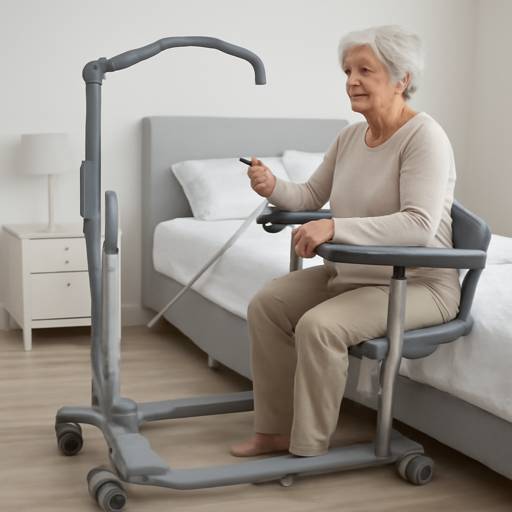
When a loved one begins to struggle with rising from a chair, bed, or toilet, the simple act of standing becomes a daily obstacle. Family caregivers often find themselves straining their backs and shoulders, risking injury while trying to provide the support their relative needs. The solution lies in a device designed specifically for partial-weight-bearing transfers: a sit to stand lift for home use. Unlike full-body sling lifts, this equipment allows the patient to actively participate in the transfer, engaging their leg and core muscles while receiving mechanical assistance. This not only preserves dignity but also helps maintain muscle strength and circulation. For families navigating home care, understanding the principles, features, and real-world applications of these lifts is the first step toward safer, more comfortable daily routines.
Understanding the Mechanics and Benefits of a Sit to Stand Lift for Home Use
A sit to stand lift operates on a straightforward yet effective mechanical principle. The patient is positioned on a low-profile seat or sling while sitting at the edge of a bed, chair, or wheelchair. A padded knee pad stabilizes the lower legs, and a padded chest strap or vest supports the upper body. When the caregiver activates the lift—either manually with a hydraulic pump or electrically via a battery-powered motor—the patient is gently tilted forward and raised into a standing position. The key distinction from a total-lift device is that the patient bears a portion of their own weight through their feet and legs, making the transfer more physiologic and less passive. This active participation reduces muscle atrophy and helps maintain the ability to stand independently over time.
For home use, the benefits extend far beyond the patient. Caregiver strain is dramatically reduced because the lift removes the need to bear the brunt of the patient’s weight during pivoting or lifting. Instead, the caregiver only steers the lift and manages the sling or vest, reducing the risk of back injuries, shoulder sprains, and falls. A study published in the Journal of the American Medical Directors Association found that introducing sit to stand lifts in home environments lowered caregiver injury rates by over 40% within six months. Beyond safety, these lifts promote dignity and independence. Patients who previously needed two people to transfer can now stand with just one assistant, often feeling more in control of their movement. Daily activities such as toileting, bathing, and moving to a dining chair become less stressful and more respectful of the individual’s autonomy.
Another critical advantage is the reduction of skin breakdown and pressure injuries. Because the patient is not being dragged across surfaces, friction and shear forces are minimized—a major concern for those with fragile skin or early stage pressure ulcers. The lift’s seating component can be removed for cleaning, maintaining hygiene between transfers. For families evaluating home care equipment, a sit to stand lift is often the most versatile option for anyone who can bear weight on their legs but lacks the strength or balance to stand independently. It bridges the gap between total dependence and full mobility, making it a cornerstone of modern home care.
Key Features to Look for When Selecting a Home Sit to Stand Lift
Choosing the right device for your home requires careful consideration of several technical and practical factors. The first consideration is weight capacity. Most home-use lifts support between 350 and 500 pounds, but it is vital to verify the patient’s weight against the manufacturer’s stated limit. Exceeding the safe working load can lead to mechanical failure or tipping. Next, evaluate the base width and maneuverability. A lift designed for home use should have a sturdy, wide base that can straddle a standard commode or toilet. Some models feature adjustable legs that narrow for smaller spaces, such as narrow hallways or doorways, and widen again for stability during transfers. Look for lockable casters: two locking swivel wheels provide secure positioning without unwanted rolling.
The lifting mechanism itself is another differentiator. Manual hydraulic lifts require the caregiver to pump a handle repeatedly to raise the patient. They are less expensive and quieter but can be physically tiring during multiple transfers. Electric lifts with rechargeable batteries offer smooth, push-button operation, ideal for caregivers with limited strength or for patients who need frequent transfers. Battery life is crucial—most electric models provide enough power for 30 to 40 lifts per charge, but confirm that a backup option exists if the battery dies mid-transfer. The slings and accessories included with the lift greatly affect comfort and safety. A one-size-fits-all sling may not work for every body type; look for adjustable chest straps, padded knee supports, and washable fabric. Some lifts offer a commode cut-out in the sling, allowing the patient to use the toilet directly without removing the sling—a time-saver for daily hygiene needs.
When evaluating a sit to stand lift for home use, pay attention to the patient’s participation level. Some lifts require the patient to hold onto handles; others provide a chest belt that supports them if they cannot grip. For patients with weak upper extremities, a full vest-style support with a rear handle is safer. Floor clearance is another overlooked detail: the lift must be able to roll over thresholds and small rugs without catching. Finally, consider the warranty and service options. A home lift is an investment that should last years, so look for at least a two-year warranty on the frame and motor, and accessible customer support for replacement parts like slings and batteries. By matching these features to the patient’s specific mobility level and home layout, families can ensure the lift becomes a reliable part of daily life rather than a frustrating piece of equipment.
Real-Life Applications and Case Studies: How Sit to Stand Lifts Transform Home Care
To illustrate the practical impact of sit to stand lifts, consider the case of Margaret, a 78-year-old woman recovering from hip replacement surgery. Her daughter, Linda, was her primary caregiver. Before the lift was introduced, every transfer from bed to wheelchair required two hours of planning and often ended with both women exhausted and in pain. The lift allowed Margaret to bear some weight on her recovering hip, which actually sped up her rehabilitation. Within three weeks, she could stand with only the lift’s assistance, then progress to a walker. Linda reported that the psychological shift was equally important: Margaret regained confidence and was no longer afraid of falling. This real-world example underscores how a sit to stand lift is not merely a transfer tool—it is a rehabilitation enabler.
A different scenario involves Tom, a 65-year-old with multiple sclerosis who experienced progressive leg weakness. His wife, Susan, was struggling to assist him from his power wheelchair to the toilet four times a day. The risk of her injuring her back was high. With a sit to stand lift, Susan could position Tom at the edge of the chair, secure his knees against the pad, and press a button to raise him. The lift’s narrow base allowed it to straddle the toilet, so Tom could sit directly on the commode without being moved again. This reduced the number of transfers per day and significantly cut down the time spent on each one. Over six months, Susan did not miss a single day of caregiving due to her own physical pain, whereas previously she had missed work twice for chiropractic treatments. The lift paid for itself in saved medical costs alone.
In a more community-oriented example, a small home-care agency in Ohio implemented sit to stand lifts for clients who were previously classified as “two-person assist.” The agency reported a 35% reduction in worker’s compensation claims related to lifting injuries within the first year. Clients also reported higher satisfaction scores because they felt safer and more independent. One case involved a bariatric patient weighing 380 pounds who had been confined to bed for weeks due to the inability of family members to lift him safely. The sit to stand lift with a 500-pound capacity allowed him to stand for the first time in a month, improving his mood and bowel function. These examples demonstrate that the value of a sit to stand lift extends beyond individual household boundaries—it reshapes entire caregiving ecosystems by balancing safety, dignity, and clinical outcomes. When integrated thoughtfully into home routines, these lifts become transformative tools that reduce bedsores, falls, caregiver burnout, and hospital readmissions, all while preserving the human connection that lies at the heart of family care.